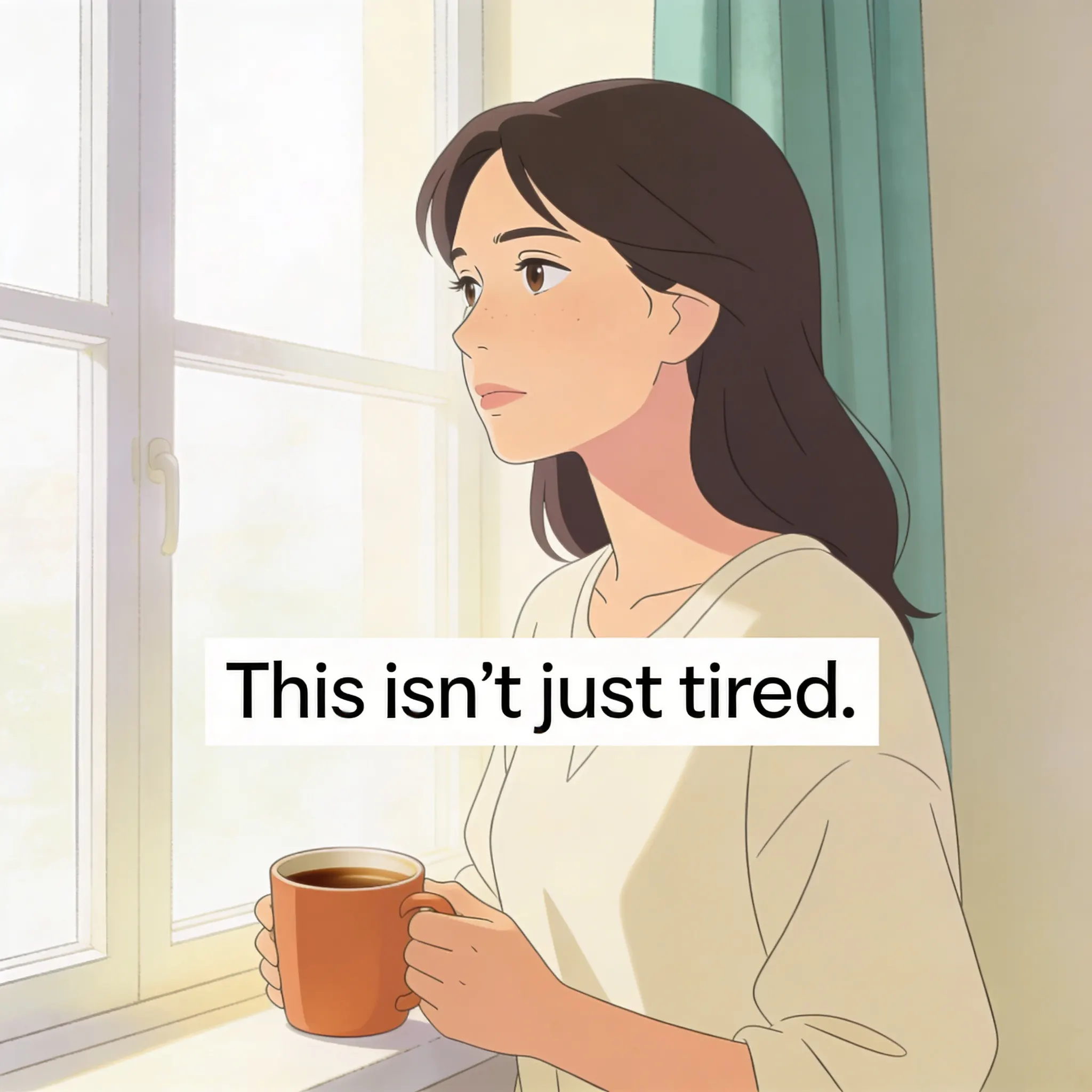

You go to bed on time, drink water, do what healthy people are supposed to do, and still wake up heavy. You call it tired because that sounds manageable, but part of you knows something else is happening.
When the label is wrong, the strategy will be wrong too. If you are physically tired, sleep and food help. If you are emotionally depleted, those same actions barely touch it — because the unresolved emotional load is still active. You end up doing “the right things” for the wrong state.
When the label is wrong, the strategy will be wrong too.
Use a three-check reset before you decide what you need
Check your body budget first.
Did you sleep poorly, skip food, overload caffeine, or push through without movement? If yes, you may be physically tired. Start with body care: fuel, water, light movement, earlier shutdown.
Check your emotional residue.
Did something from the day stay “stuck” in your system — a tense meeting, a conversation you replay, a decision you resent? If yes, you may be emotionally depleted. Sleep helps body fatigue. It does less for unprocessed emotional load.
Check what you're avoiding naming.
If all you can say is “I’m tired,” pause and test alternatives: resentful, overextended, lonely, uncertain, numb. The goal is not perfect accuracy. The goal is moving from a vague label to a usable one.
Then match support to state:
- Body fatigue → repair inputs (sleep, food, pace)
- Emotional depletion → reduce emotional load (name it, set one boundary, process one moment)
✦ Match support to state
Body fatigue responds to input repair. Emotional depletion responds to reduced emotional load and processing.
A quick timing check helps too: if a small physical intervention changes your state within 20–40 minutes, fatigue was the main driver. If your body feels slightly better but the heaviness stays, depletion is running the show.
When you name it accurately, recovery becomes possible
Once you can tell the difference, self-trust comes back. You stop moralizing exhaustion (“I should be handling this better”) and replace it with something more useful: “I know what this is, and I know what helps.”
You also communicate more precisely. “I’m physically wiped” lands differently than “I’m emotionally overloaded and need space before we talk.” Fewer misread signals, less friction.
You won’t get perfect energy out of this. What you get is a smaller, more useful thing: the right words, and fewer days spent fixing the wrong problem.
Understand what your low-energy day actually needs
Use KeikoAI to separate physical fatigue from emotional depletion and choose support that helps.
Try KeikoAI freePrivate by design · No streak pressure
Follow us to see what's new