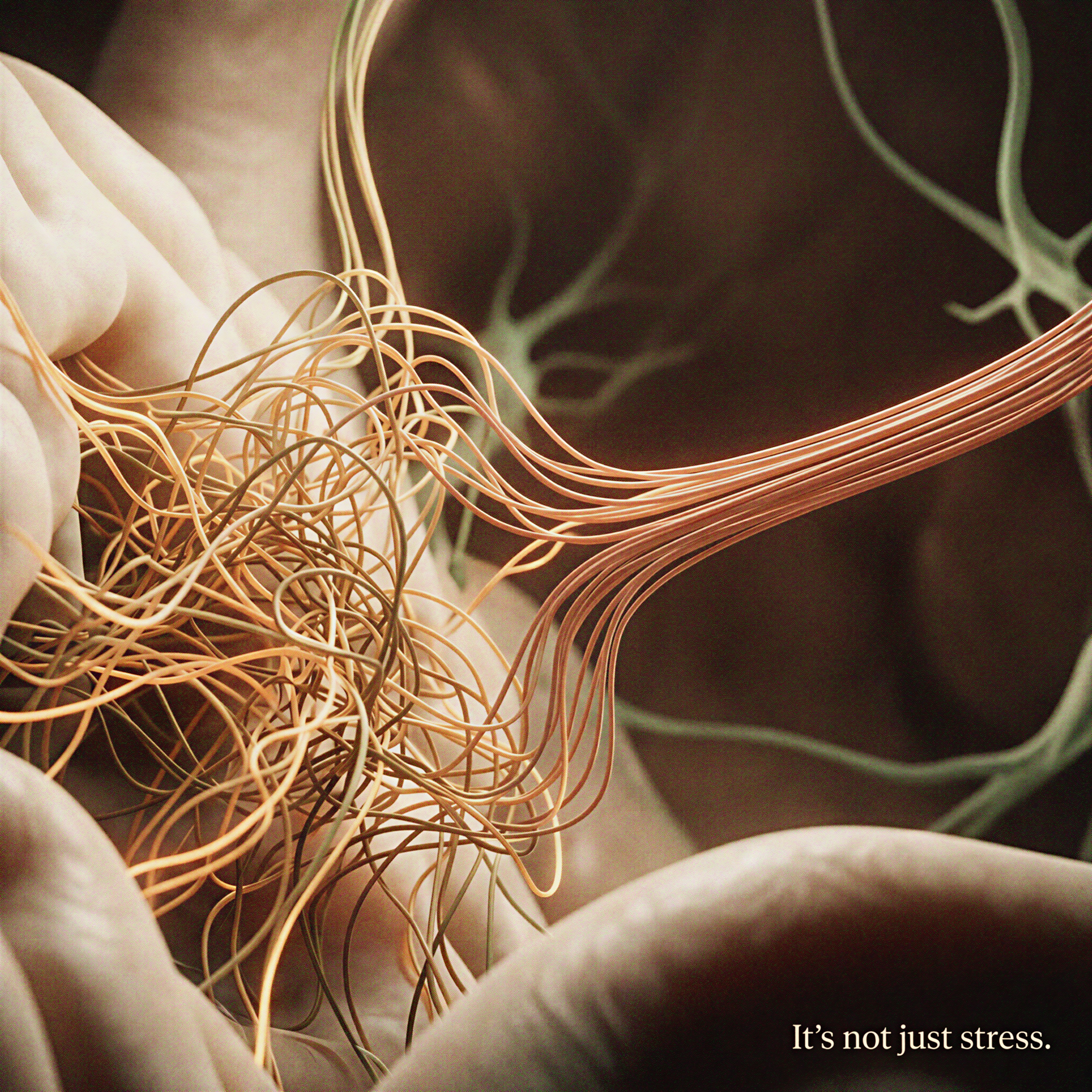

You say you’re stressed because it’s quick and socially acceptable. But “stressed” can mean overloaded, resentful, guilty, stuck, afraid, or emotionally flat. When one label carries everything, you can’t choose a useful response.
You might even look calm while your inner state keeps shifting. That mismatch is why generic advice fails. You are trying to solve a specific emotional state with a non-specific word. 💡
You are trying to solve a specific emotional state with a non-specific word.
One word hides ten different realities
Externally, the issue looks like a busy life. Deadlines, messages, responsibilities. Internally, it feels like static: you’re carrying a lot but can’t explain what exactly is heavy. Philosophically, it’s unfair that adults are expected to regulate emotions they were never given language for.
That language gap is the villain. Not your capability.
Most people are not bad at feeling. They are under-equipped at naming. And without naming, regulation becomes guesswork.
When you only track a top-line mood, you get a record of labels, not understanding. You need a way to capture what’s underneath the first word your brain reaches for. 🧠
◆ Naming creates leverage
Most people are not bad at feeling. They are under-equipped at naming. And without naming, regulation becomes guesswork.
Turn one check-in into a usable emotional signal
Use this three-step approach in Keiko’s Mood flow.
Pick the first accurate top-line mood, not the perfect one.
Choose from the 16 mood options based on what is true right now. Don’t overthink. The first selection is an entry point, not the final diagnosis.
If you freeze, use elimination: what is definitely not true right now? Removing wrong options usually reveals a workable one.
Read the layer beneath the label.
After your selection, Keiko captures two hidden dimensions automatically: valence (how positive/negative) and energy (how activated/depleted). It also surfaces what the mood feels closest to beneath the named emotion - states like guilt, resentment, numbness, uncertainty, hope, or enoughness.
This is where clarity usually appears. “Stressed” plus low energy plus resentment needs a different intervention than “stressed” plus high energy plus uncertainty.
That difference matters in real life. Resentment may need a boundary or direct conversation. Uncertainty may need planning and one defined next step. Same top label, different path.
Use the support-need signal to choose your next move.
Keiko also identifies what would help most in that state, like CALM, SPACE, REST, REASSURANCE, UNDERSTANDING, SAY_IT, CLARITY, CONFIDENCE, or CONNECTION. Treat that as a practical recommendation, not a slogan. If the signal is SPACE, your next step is not another call. If the signal is SAY_IT, silent rumination is probably prolonging the loop.
Keep the action small enough to do now. One needed action beats five ideal actions you postpone.
Optional note: add one sentence in your own words. Not an essay. Just enough context so future you can remember what this moment was actually about.
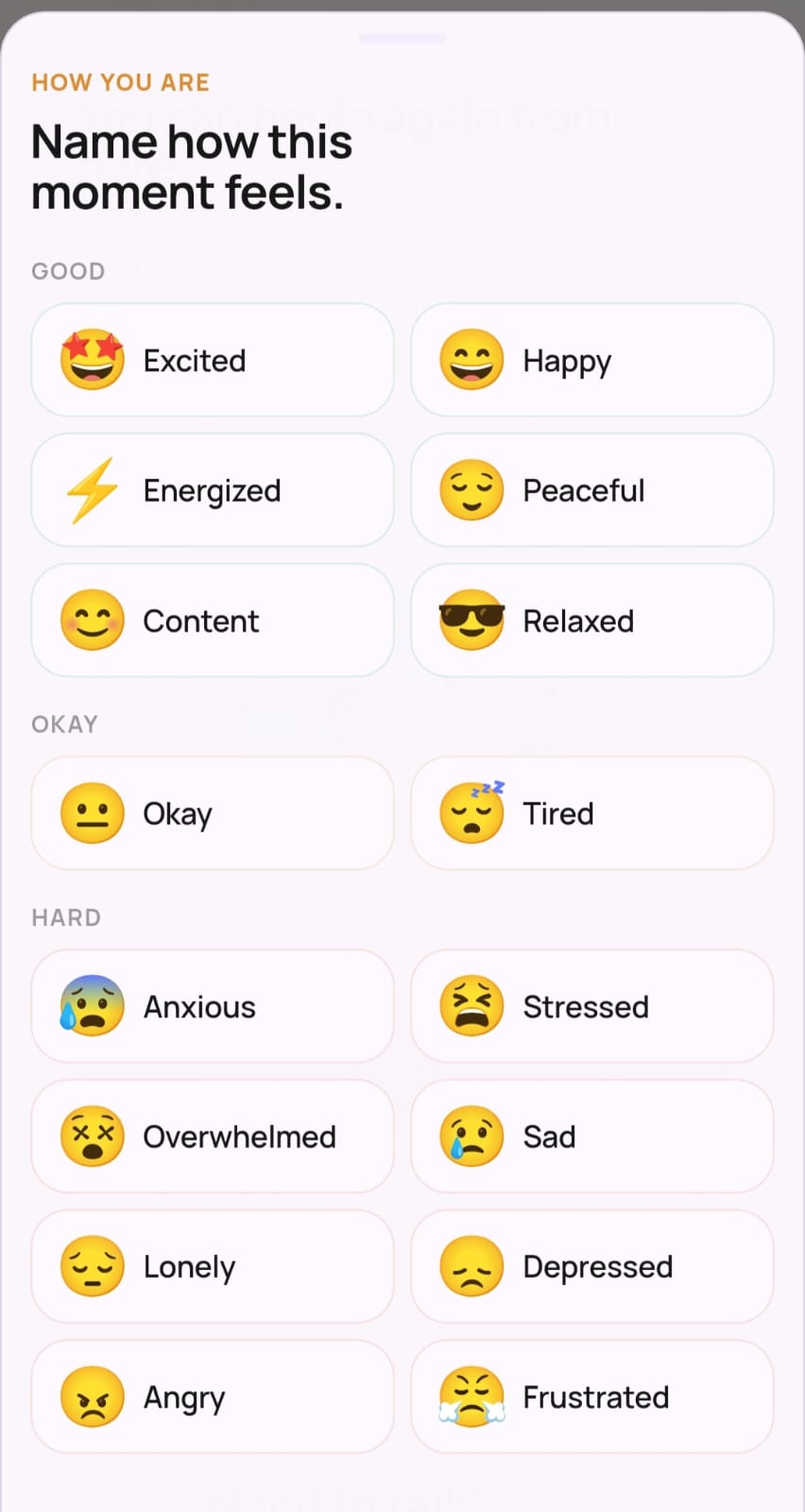
Do this once daily for two weeks and you’ll notice a change: your internal experience stops feeling random because your language gets more precise.
By week three, you’ll usually spot recurring pairings: which moods arrive with depletion, which support needs repeat, and which contexts produce the same internal pattern. That is where self-understanding starts becoming predictive. ✨
You become easier to help - including by yourself
The win is not “better mood scores.” The win is emotional granularity you can act on.
Instead of saying “I’m stressed, I don’t know,” you can say, “I’m depleted and resentful; I need space before I respond.” That single shift changes conversations, boundaries, and recovery time.
You’re still living a full life with pressure in it. But pressure is no longer a blur. You can see what state you are in, what it needs, and what to do next. That is what self-understanding feels like in practice.
Once that happens, you become easier to support at work and at home. People around you stop getting mixed signals, and you stop asking your nervous system to carry unnamed load. 🌿
✦ Section takeaway
Same top label, different path.
Build emotional clarity one check-in at a time
Use KeikoAI's mood flow to name what you're actually feeling and choose support that fits your real state.
Try KeikoAI freePrivate by design · No streak pressure
Follow us to see what's new